
There is a great deal of evidence behind “gamifying” all manner of tasks, where disproportional effort chases a dopamine hit from achieving an arbitrary trophy. And, in education, likewise educational games are pervasive through childhood.
But why not adulthood? And medicine?
This study report describes a role-playing game in which physicians received instruction regarding proper transfer of injured elderly patients to a specialized trauma center. The supplement provides a few screenshots, but, suffice to say, if you “undertriage” someone, you are a Bad Doctor:
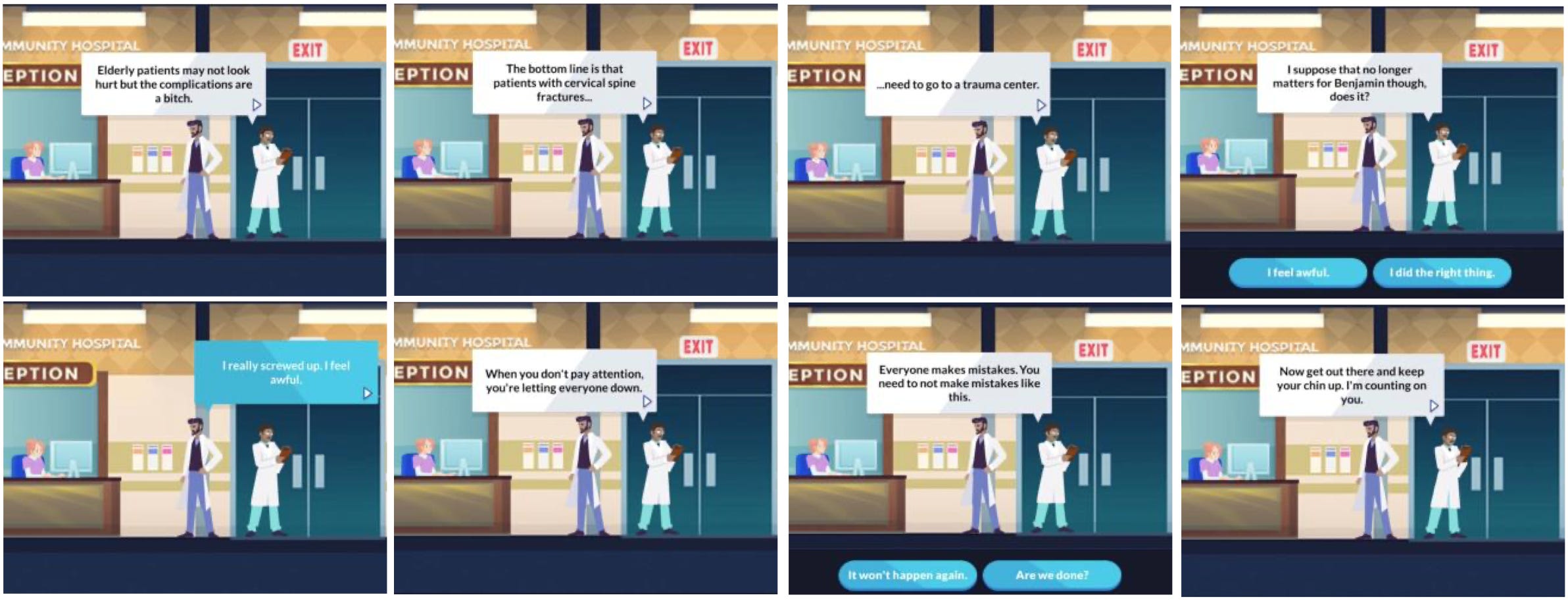
These authors recruited 400 physicians to play their iPad game for at least 2 hours and compared them with 400 physicians who … well, they were just left to wallow in their ignorance. Following the exposure to the intervention, there was a difference in physician behaviors over the following year:
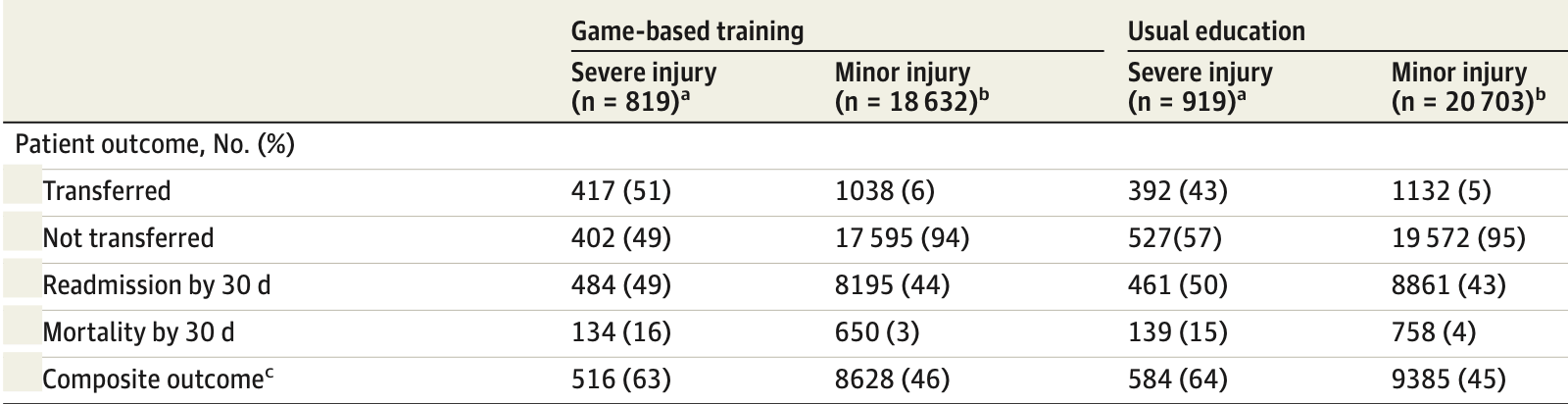
In the group exposed to game-based training, there was an increased likelihood of transfer for “severely injured” (AIS >16) elderly. Thus, the game wins – although, this doesn’t show the game is superior to another educational intervention, just against no education whatsoever.
Now, should we point out the lack of difference in patient-oriented outcomes? Is it reasonable to suggest clinicians in the “usual education” group simply made good decisions on their own clinical judgment, rather than a seeming obligation for transfer? These data aren’t nearly robust enough to support those assertions in any meaningful fashion, but it is an appropriate follow-up question for a future time.