
Banging the Nirsevimab Drum
Back for another look as winter pressures mount.
There are real limitations on these observational nirsevimab studies, but the last time we looked at this RSV monoclonal antibody we were impressed. We were not impressed, however, with the cost: pricing designed to maximize revenue based off health system cost-avoidance, rather than the actual cost of development or manufacture.
But, whereas the last look at nirsevimab covered the first season of RSV exposure after birth, this publication attempts to do an analysis of the “second season” – and it’s always fun to have a directed acyclic graph!
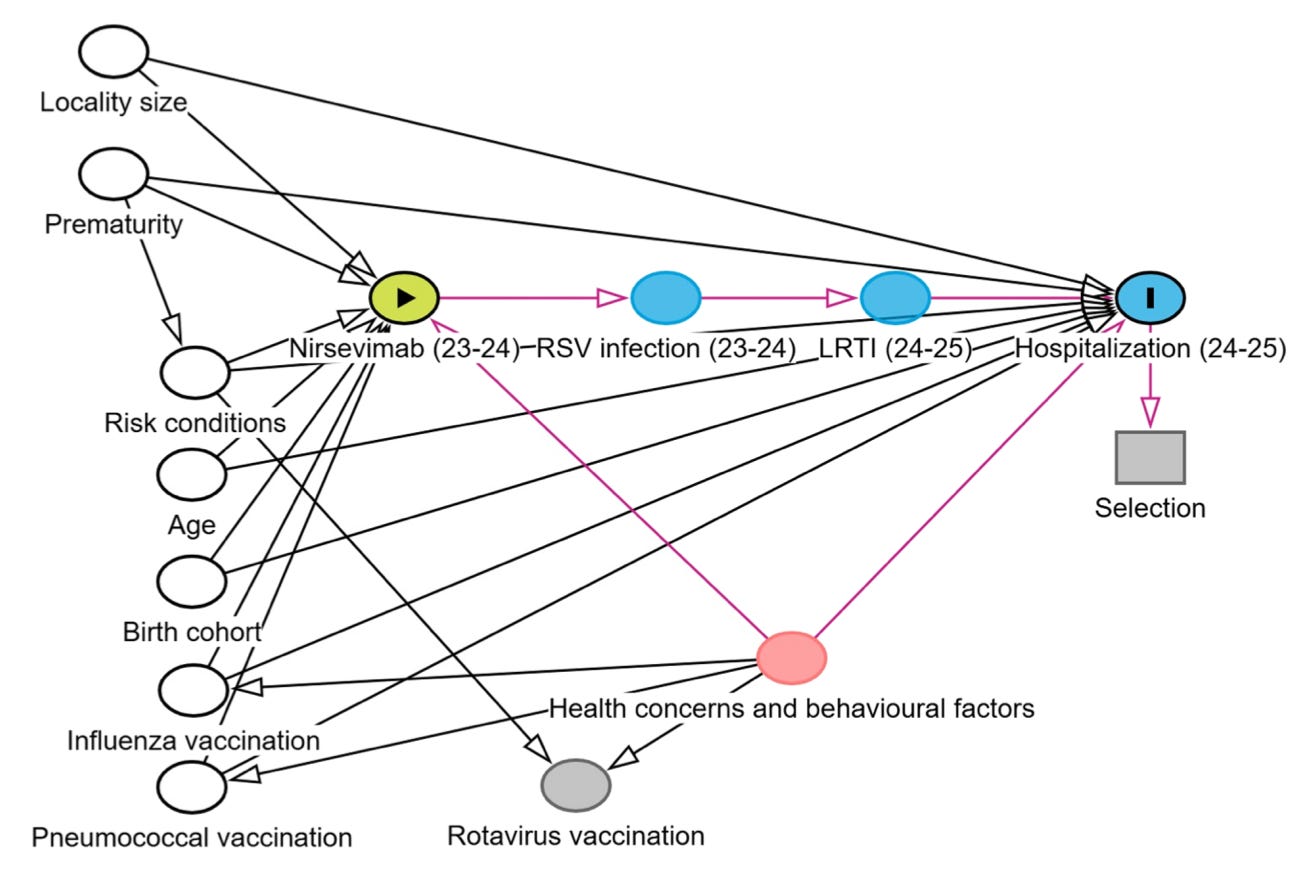
The key behind showing this being the complexity and challenge of attributing causal effects to an intervention in these sorts of retrospective case-control studies.
So, why even look at this if there are all these limitations? Because, unfortunately, whilst academic purists have the luxury of downplaying these data, these confounded and limited observations are frequently all health systems have to work with when making funding decisions. And these data certainly make an interesting case for extended durability of the protection from nirsevimab:
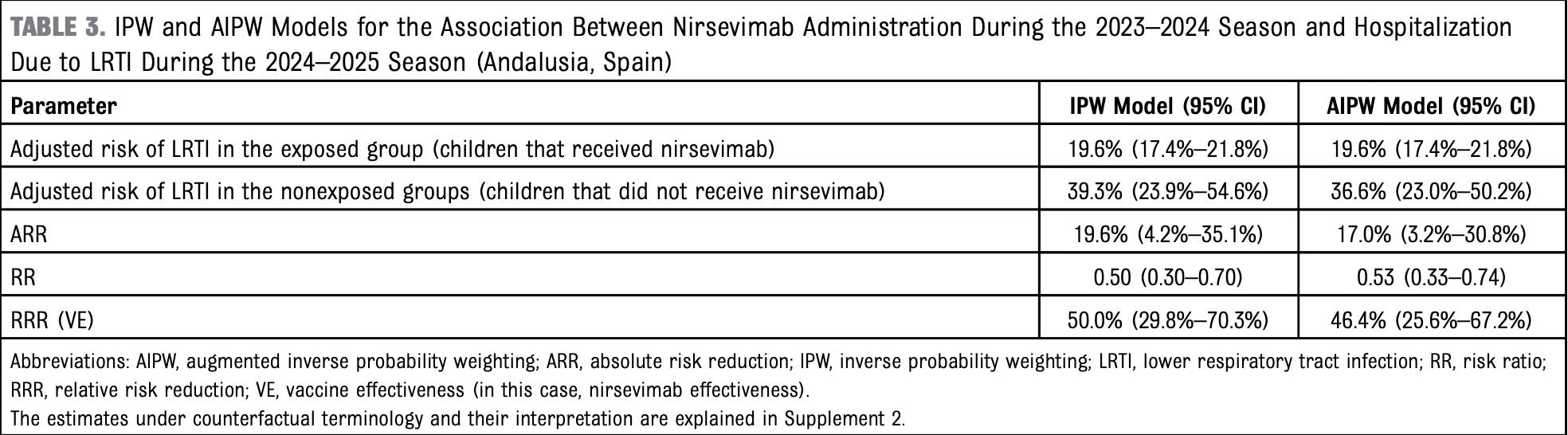
It’s probably safe to say nirsevimab is preferred over palivizumab, and the better question is how widely prophylactic vaccination programs ought be instituted. This sort of persistent protection adds to its appeal.