
Does Fluid Intake Ward Off Renal Stones?
Perhaps or perhaps not, but check out this cool water bottle.
It is dogmatic teaching that increased fluid intake is a method for reducing stone formation and the likelihood of future episodes of renal colic. Makes sense, right? Dilute urine seems less likely to develop the precipitates necessary to form new stones.
This is a study that’s as much about the behavioural intervention as it is the prevention of kidney stones – a long-term randomisation to “increased” vs. “standard” fluid intake after enrolment following renal colic. “Increased” intake was defined as a daily target of 2.5L, titrated down for those less than 75kg.
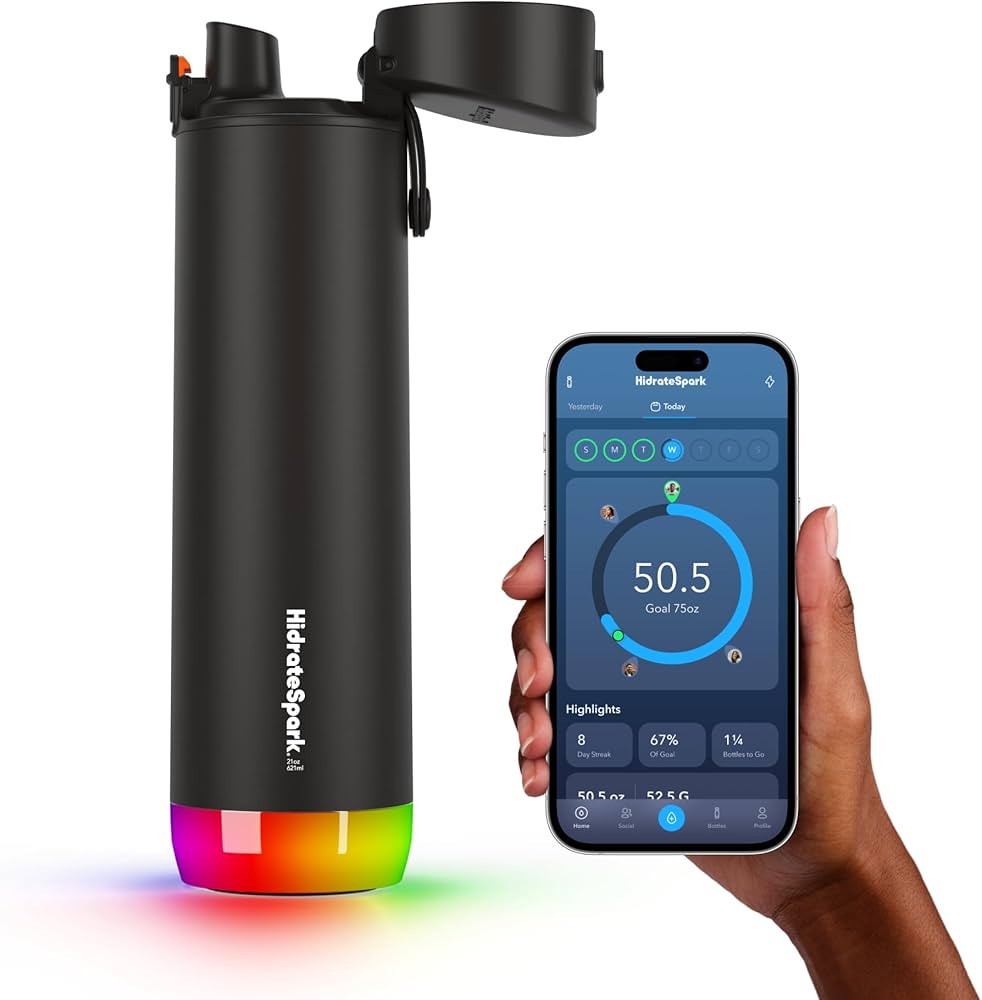
This is their fancy water bottle and tracker:
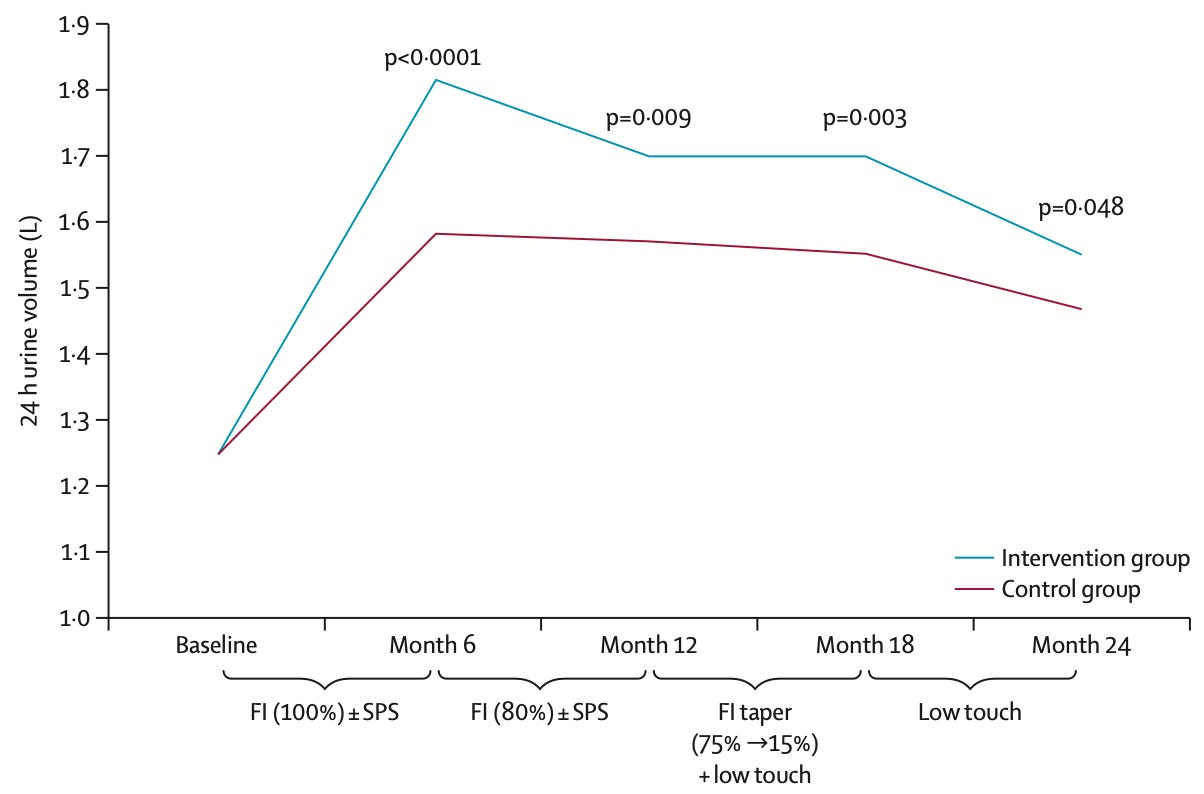
This is their measurement of daily fluid intake across the duration of the study:
And this is whether new stones showed up or not:
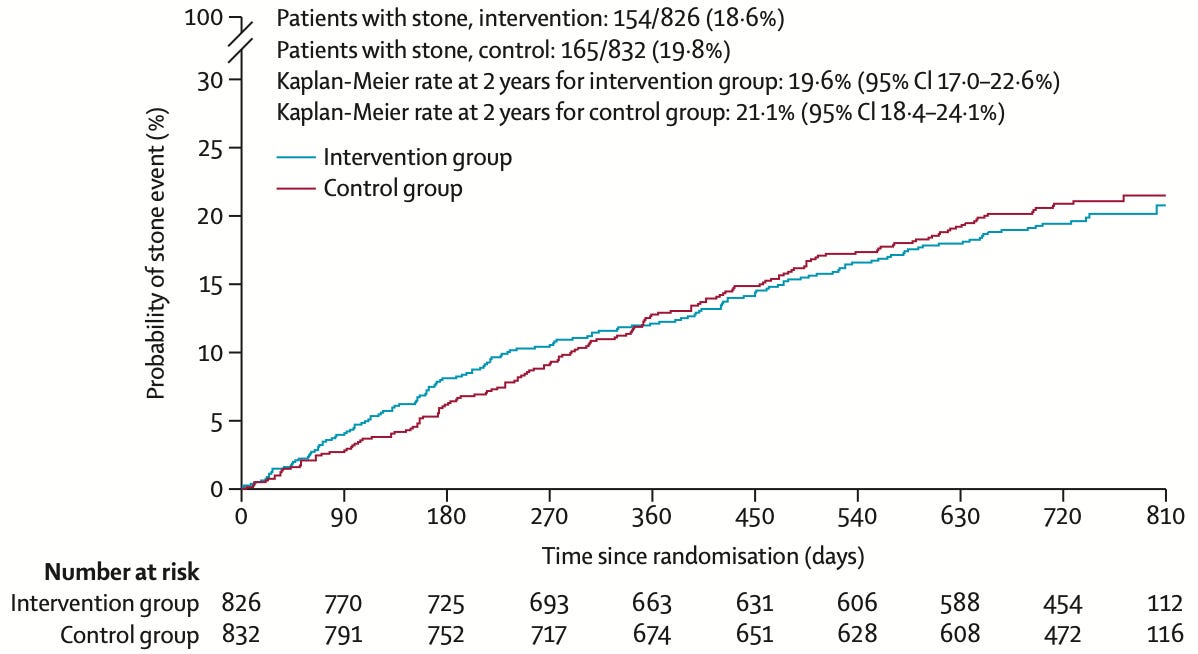
So, pretty much a wash – but, at least everyone got a cool water bottle!
The issues: 1) both arms increased their fluid intake from baseline, and 2) the null effect assumes the measure of adherence and fluid intake is reliable. These methods only measure fluid intake from the smart water bottle and do not take into account other sources. It is not truly possible to determine the extent to which the intervention cohort exposure differed from the control group, and therefore the relative utility of fluid intake for stone prevention.
There’s probably kernels of truth in the old dogma, based on increased risks observed when daily fluid intake was similar to this baseline of ~1-1.2L. However, there are likely diminishing returns at a certain level, making the 2.5L target precarious at best.