
Not A Magic Stethoscope – Yet
TRICORDER not yet a tricorder.
This is a mildly awesome trial coming out of the NHS, 1) because of the tryhard Star Trek acronym, and 2) it ostensibly enrolled a cohort of over 1.5 million(!) patients. But, that’s about where the good vibes end.
In this, the Triple Cardiovascular Disease Detection with an Artificial Intelligence-enabled Stethoscope (TRICORDER) trial, these authors put the AI-enabled stethoscope up against “usual care” across 200 GP practices in England. In theory, the AI analysis of phonographic findings, plus a single-lead ECG tracing, would improve detection of heart failure, atrial fibrillation, and valvular heart disease.
No:
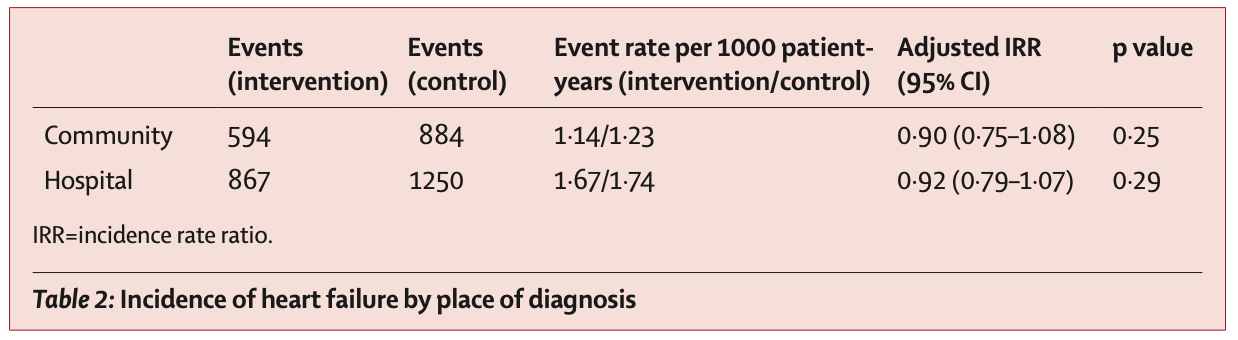
But, also maybe, because:
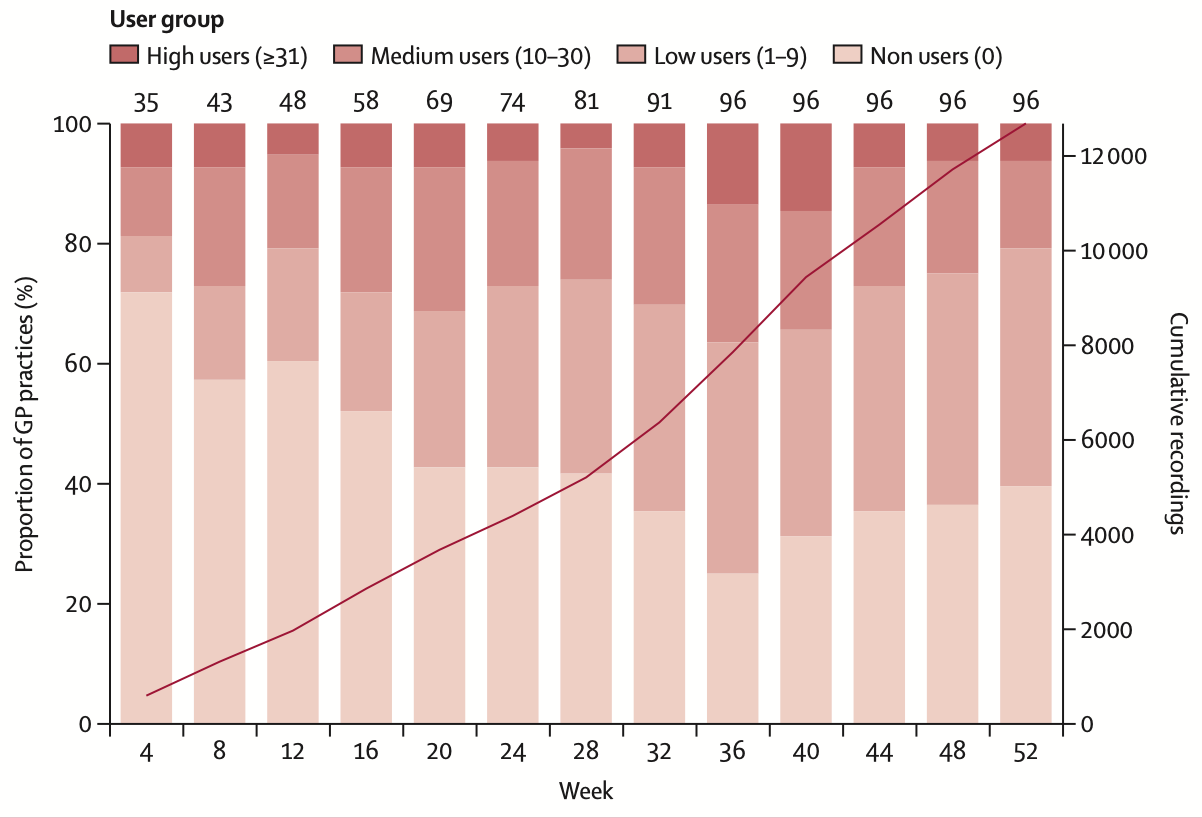
As you can see, despite practices being randomized to the AI-enabled stethoscope, individual clinician uptake was poor. However, in the “per-protocol” cohort – the ~8,000 patients for whom an in-person evaluation actually used the AI-enabled stethoscope – the incident rate of new diagnosis of each of the conditions of interest was increased by a small but notable amount. Unfortunately, the patients in this specific per-protocol cohort were also older and more comorbid than the ones who were not, confounding the reliability of any observed diagnostic advantage for AI.
Lastly, here are the performance characteristics of the AI-enabled stethoscope in that per-protocol cohort:
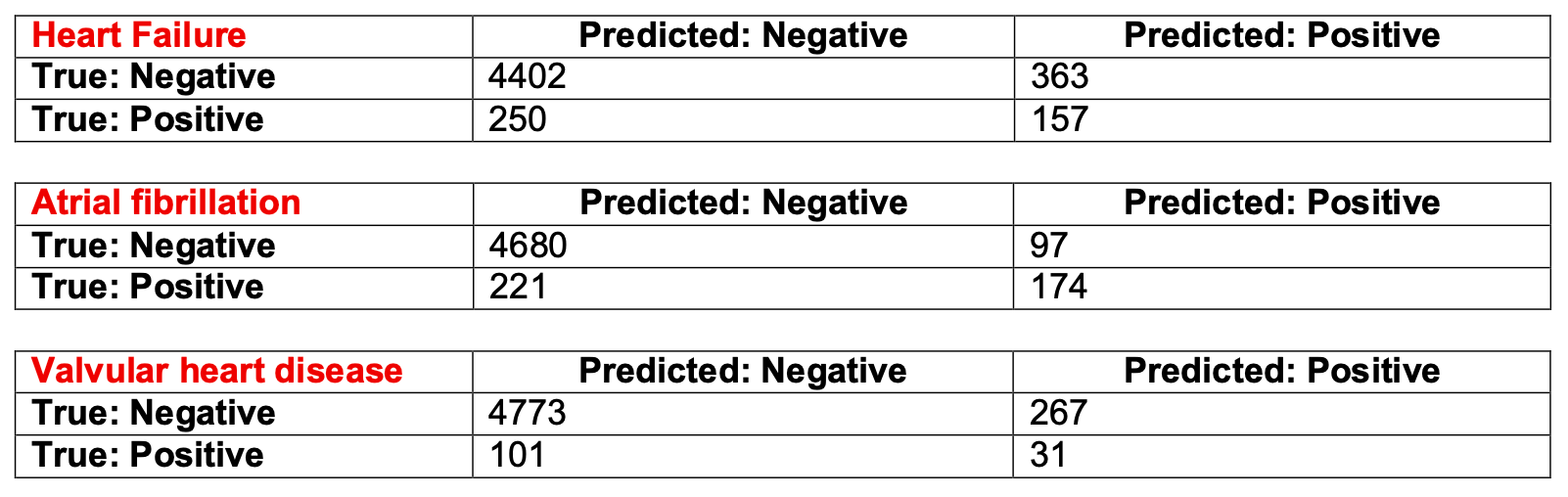
Grossly unusable, with many false positives and negatives. The only hint of a reasonably reliable positive was for atrial fibrillation.
There are hints of promise tucked into their Supplementary Appendix, but the system clearly needs further improvement and refinement before widespread adoption.