
The whole “clinician + AI is better than clinician alone” promise has certainly been embraced – and currently manifests through many different mechanisms (and soon to be more).
But the tricky part of decision-support, AI or otherwise, remains the unforgiving meatspace of human clinical staff. The best tools offer little advantage if, for whatever reason, they remain unused.
That is the topic of this paper from Israel, a real-world deployment of the “SHAKED” AI-driven decision-support tool meant for contemporaneous augmentation of emergency department consultations. Here’s some representative output from the tool, just to set the stage:
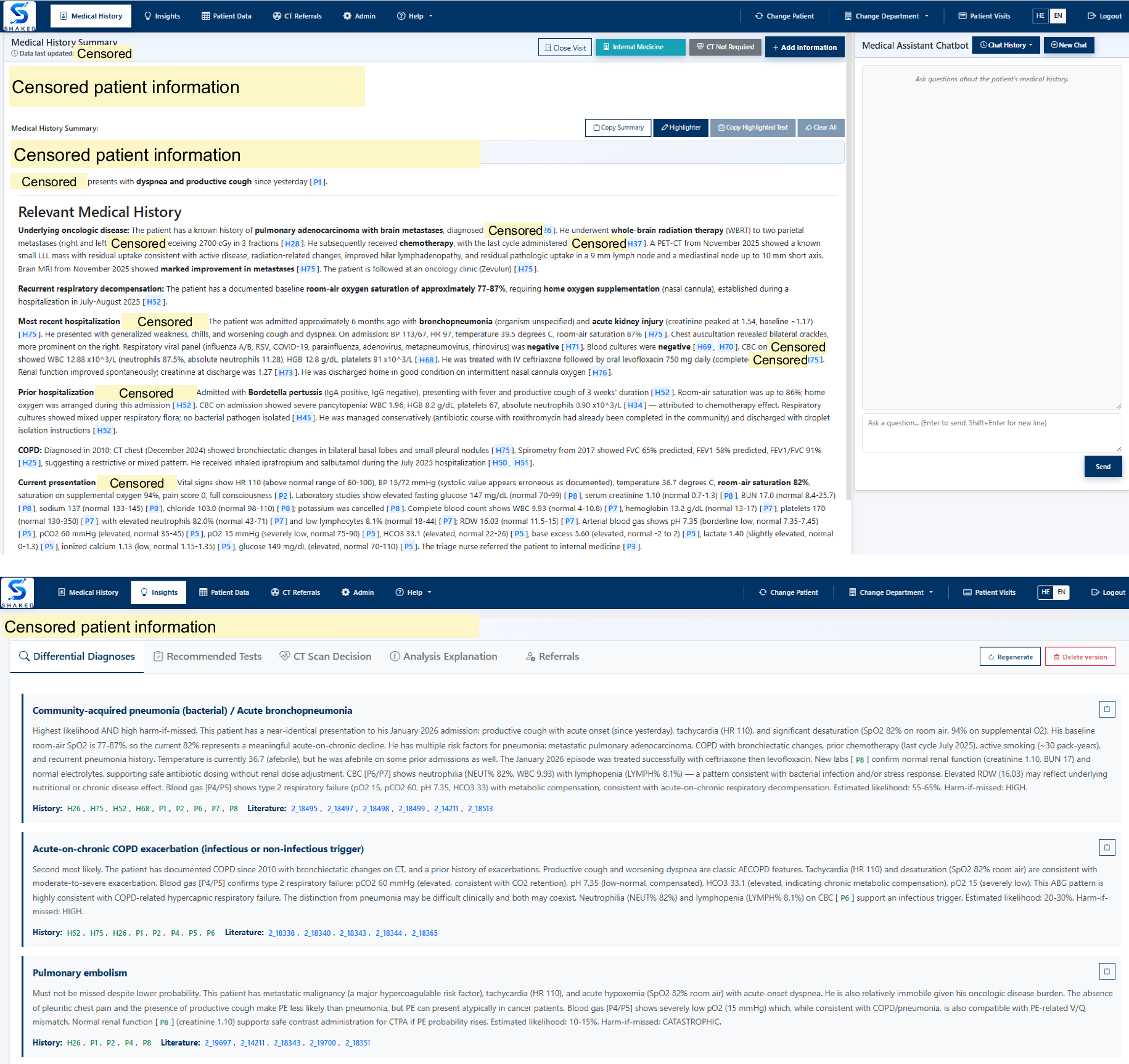
As can be seen, it tries to integrate health summaries and current visit information, provide a “medical assistant chatbot”, and a host of tools for differential diagnoses, recommended tests, etc.
These authors attempted to measure various aspects of its impact on care – but, the most interesting feature of this report is a potential window into clinical acceptability:
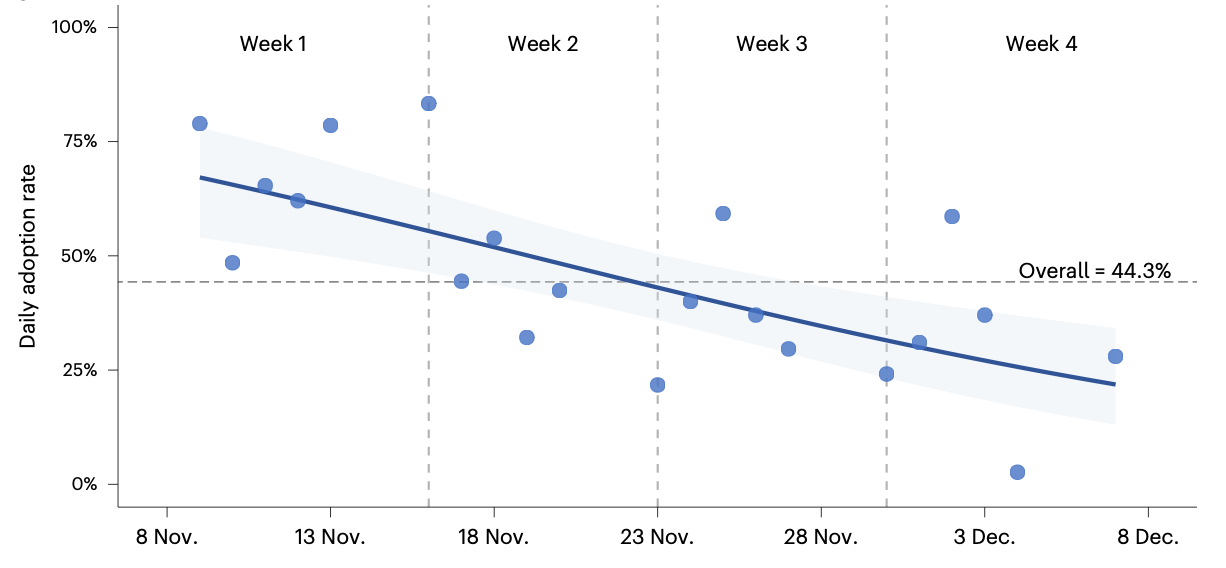
When the tool was made available to clinicians, initially, there was fairly robust uptake – accessed in 70+% of patient encounters. However, within four weeks, that rate had dropped to 25% or below!
The authors do report some various analyses on the operational effects of engagement on clinical consultation time, and there is a positive effect associated with use of the AI tools. Even though the samples are small and the intervention engagement decayed rapidly, I suspect there will be substantial qualitative insight to be gleaned. For example, it would be interesting to evaluate the phenotypes of remaining cases for which clinicians utilized AI – are they the most complex cases? Diagnostic uncertainty? Extensive medical histories to summarize? Or, is the system simply slow or unintuitive, and workload pressures are driving clinicians away, regardless of need.
I look forward to seeing more of these sorts of real-world implementation studies – critical for advancing the integration of AI tools into real-world use.